The Busia-Uganda border stands as a critical gateway for cross-border grain trade in East Africa. Here, small-scale grain traders and women farmers navigate complex market dynamics daily. The EAC Simplified Trade Regime (STR) has made trade easier for small scale traders, exempting consignments valued under USD 2,000 from import duties. However, there are still high fees and charges that traders contend with.
For instance, exporting 2–5 MT of grain between Uganda and Kenya, traders must navigate seven different trade facilitation agencies at the border, with inspection fees and testing charges totaling approximately USD 200, around 10% of the consignment value.
When AGMARK, with support from the AGRA, launched its project on “Empowering Women and Youth to Participate in Structured Cross-Border Grain Trade”, the Busia Women Cross-Border Traders Association (CBTA) on the Uganda side became one of the early champions of change.
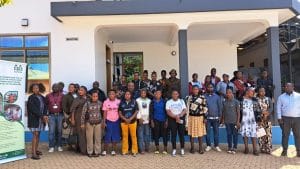
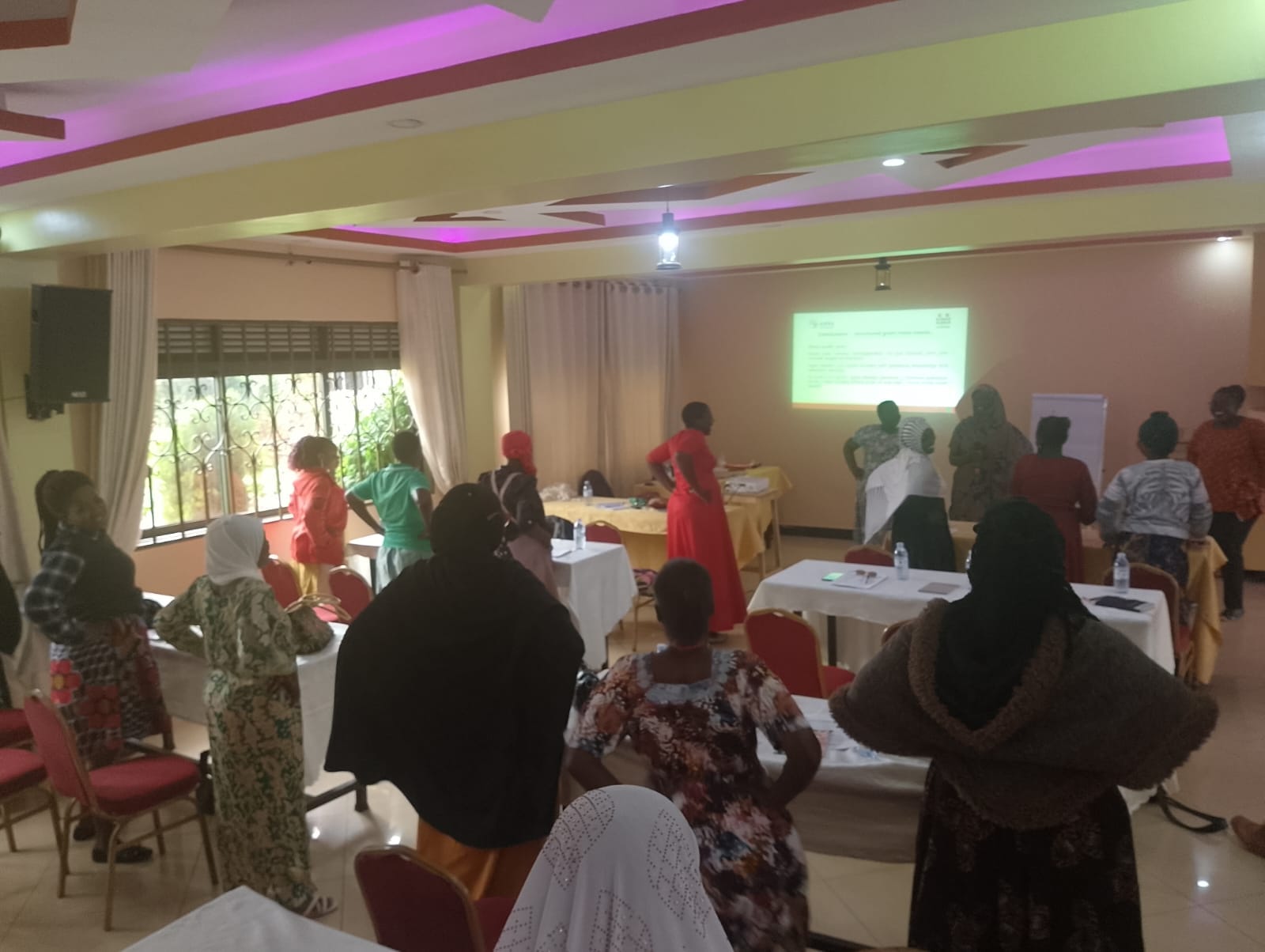
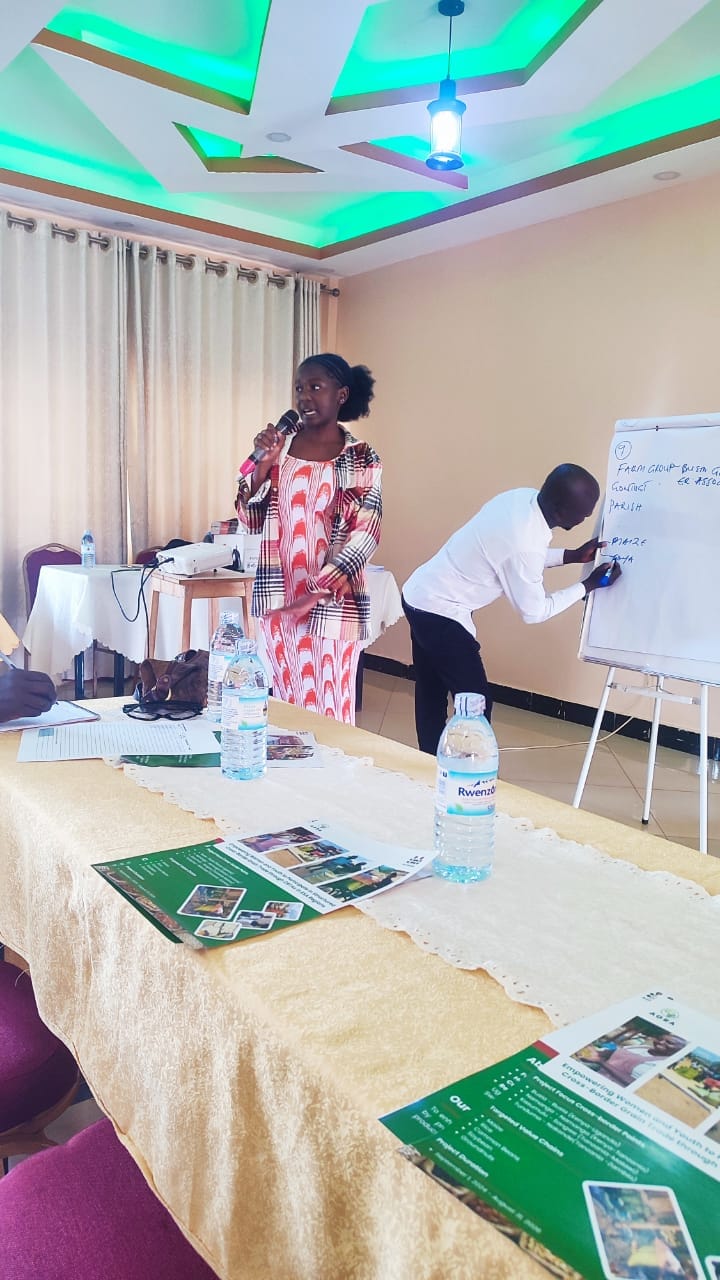
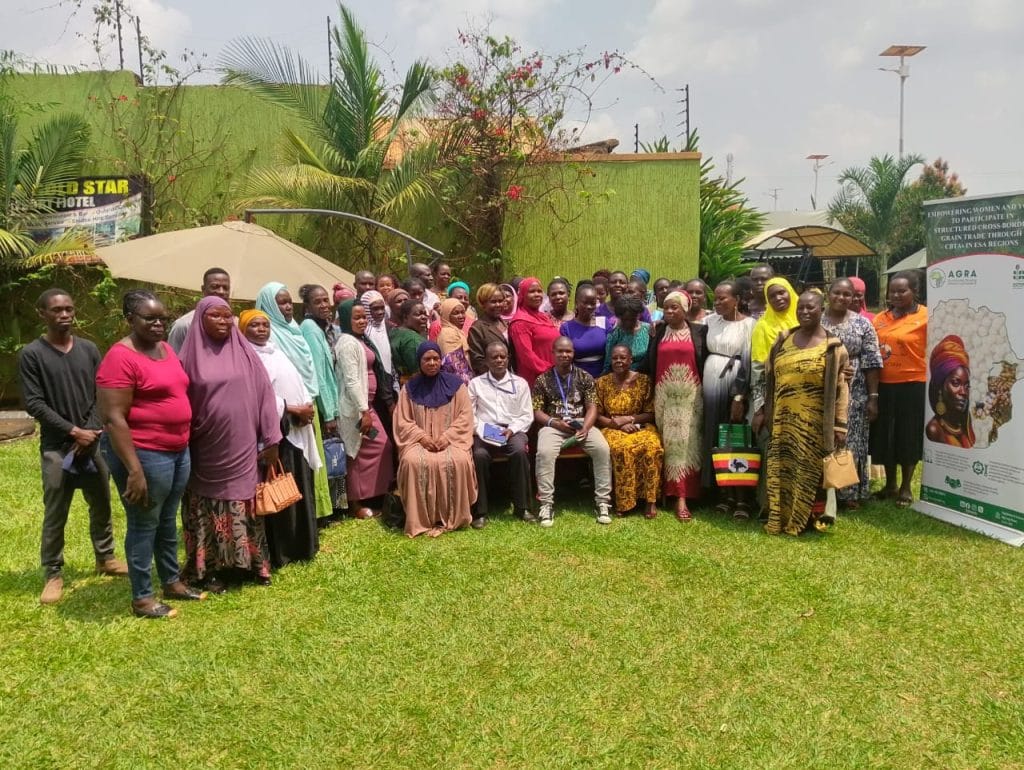
We recently concluded a highly impactful three-day capacity building training at Goldstar Resort Hotel in Busia, Uganda. From August 20th to 22nd, 38 traders (with a strong focus on women and youth traders) from the Busia Women Cross-Border Traders Association gathered to strengthen their skills in post-harvest management, grain standards compliance, quality control, warehousing practices and navigating border control policies and tax policies. These essential competencies support profitable and sustainable grain trade across the East and Southern Africa (ESA) region.
Also Read: Resilient Women Traders at the Busia Border
For instance, exporting 2–5 MT of grain between Uganda and Kenya, traders must navigate seven different trade facilitation agencies at the border, with inspection fees and testing charges totaling approximately USD 200, around 10% of the consignment value.
When AGMARK, with support from the AGRA, launched its project on “Empowering Women and Youth to Participate in Structured Cross-Border Grain Trade”, the Busia Women Cross-Border Traders Association (CBTA) on the Uganda side became one of the early champions of change.
We recently concluded a highly impactful three-day capacity building training at Goldstar Resort Hotel in Busia, Uganda. From August 20th to 22nd, 38 traders (with a strong focus on women and youth traders) from the Busia Women Cross-Border Traders Association gathered to strengthen their skills in post-harvest management, grain standards compliance, quality control, warehousing practices and navigating border control policies and tax policies. These essential competencies support profitable and sustainable grain trade across the East and Southern Africa (ESA) region.
Also Read: Resilient Women Traders at the Busia Border
Empowering Traders Through Knowledge and Skills Development
The agricultural training was designed with a clear purpose: to empower women and youth traders with practical knowledge that directly addresses the challenges they face in smallholder agriculture and cross-border trade operations. The sessions combined presentations, hands-on demonstrations, group discussions, and plenary sessions, creating an environment where experiential learning could thrive.
Participants engaged deeply with core training modules covering:
Participants engaged deeply with core training modules covering:
- Post-Harvest Management and Loss Reduction – Traders learned evidence-based methods to reduce post-harvest losses and improve grain handling practices, with 94.7% reporting enhanced understanding and 92.1% expressing confidence in applying these food security techniques.
- Grain Standards and Quality Parameters for the ESA Region – The training strengthened participants’ ability to classify grains accurately, identify quality characteristics for export markets, and detect defects and contamination, with over 94.7% showing improved skills in these critical areas of grain quality assessment.
- Storage and Warehousing Solutions – Understanding proper storage techniques and preventing post-storage losses were key focuses for agricultural value chains, with 92.1% gaining knowledge on storage methods, though practical application of warehousing models revealed infrastructure and financing barriers.
- Quality Control Measures and Food Safety – Traders enhanced their capacity to identify contamination risks and apply quality control protocols for safe grain trade, with 89.5% reporting increased confidence.
- Border Control and Tax Policy Navigation – A critical session focused on helping traders understand customs procedures, tax compliance, and how to leverage the EAC Simplified Trade Regime. Border officials from the Uganda Revenue Authority (URA) delivered a presentation on cross-border trade issues, taxation frameworks, and inspection requirements. This direct engagement with regulatory authorities provided traders with clarity on their obligations and rights, demystifying the often-complex border clearance process and reducing the risk of delays and penalties.
A Resounding Success
Participants rated the relevance of the training at an exceptional 4.82 out of 5, with 100% agreement that the content aligned perfectly with their needs. This near-universal approval validates the demand-driven design approach that AGMARK prioritizes in all our training programs.
Perhaps most striking was the Net Promoter Score (NPS) of +92.1, meaning all 38 participants rated their likelihood to recommend the training at 9 or 10 out of 10, with no detractors. This level of enthusiasm demonstrates that participants are genuine advocates who recognize the transformative value of what they learned.
Traders consistently described the training as “excellent,” “productive,” and “very relevant,” with many expressing newfound confidence. As one participant put it;
Perhaps most striking was the Net Promoter Score (NPS) of +92.1, meaning all 38 participants rated their likelihood to recommend the training at 9 or 10 out of 10, with no detractors. This level of enthusiasm demonstrates that participants are genuine advocates who recognize the transformative value of what they learned.
Traders consistently described the training as “excellent,” “productive,” and “very relevant,” with many expressing newfound confidence. As one participant put it;
“I am now a new champion.” Another noted, “The training has opened our minds to wide trade mapping.”
Addressing Real Challenges
A few participants had limited proficiency in English and could only communicate effectively in the local language (Luganda) which created gaps in comprehension and limited engagement during technical sessions. This was swiftly mitigated by pairing participants who are fluent in English with those more comfortable in Luganda.
Participants were also honest about persistent challenges that limit their ability to fully apply new knowledge. Financial constraints emerged as the primary barrier, with many traders noting that despite gaining valuable skills, access to capital for quality inputs, storage infrastructure, and working capital remains limited.
Some participants called for more hands-on field demonstrations and practical simulations to further solidify learning. Others highlighted the need for warehousing models that better reflect local financial and infrastructural realities. Many specifically requested expanded modules on financial management, loan schemes, negotiation skills, and broader inclusion of women, youth, and persons with disabilities. These insights are invaluable for shaping future training programs.
Also Read: Nakonde CBTA Partners with AGMARK for Structured Grain Trade Skills Boost in Zambia
Participants were also honest about persistent challenges that limit their ability to fully apply new knowledge. Financial constraints emerged as the primary barrier, with many traders noting that despite gaining valuable skills, access to capital for quality inputs, storage infrastructure, and working capital remains limited.
Some participants called for more hands-on field demonstrations and practical simulations to further solidify learning. Others highlighted the need for warehousing models that better reflect local financial and infrastructural realities. Many specifically requested expanded modules on financial management, loan schemes, negotiation skills, and broader inclusion of women, youth, and persons with disabilities. These insights are invaluable for shaping future training programs.
Also Read: Nakonde CBTA Partners with AGMARK for Structured Grain Trade Skills Boost in Zambia
Women's Economic Empowerment Through Growth of CBTAs
One of the most inspiring outcomes from the capacity building training has been the remarkable growth of the Busia Women Cross-Border Traders Association (CBTA). Under the leadership of Mariam Babu, the association has become an early champion of change in the region, actively participating in AGMARK’s farmer training programs designed to empower women traders with knowledge on structured trade, market linkages, agricultural cooperatives, and collective business management.
Armed with new confidence and practical skills in agricultural trade, she actively used the sessions to bring 25 new women members into the CBTA, with numbers continuing to grow. For women who had been trading informally and often in isolation, joining the association opened doors to collective bargaining, better information on regional grain standards, and access to formal market opportunities and financial services.
Armed with new confidence and practical skills in agricultural trade, she actively used the sessions to bring 25 new women members into the CBTA, with numbers continuing to grow. For women who had been trading informally and often in isolation, joining the association opened doors to collective bargaining, better information on regional grain standards, and access to formal market opportunities and financial services.
“The trainings opened my eyes to what we can achieve as a group. I used that momentum to encourage more women to join us, and they responded positively. Our membership is growing, and so is our confidence.” – Mariam Babu, Chairlady, Busia Women CBTAThrough just two training sessions, the Busia Women CBTA’s membership base has grown significantly, strengthening its position to negotiate with buyers, reduce exploitation, and influence cross-border trade policies in East Africa. The association now stands as a powerful example of how grassroots organizing, combined with targeted capacity building and agricultural extension services, can catalyze economic resilience and sustainable trade opportunities for women across the region.
Connecting with Traders at the Busia Main Market
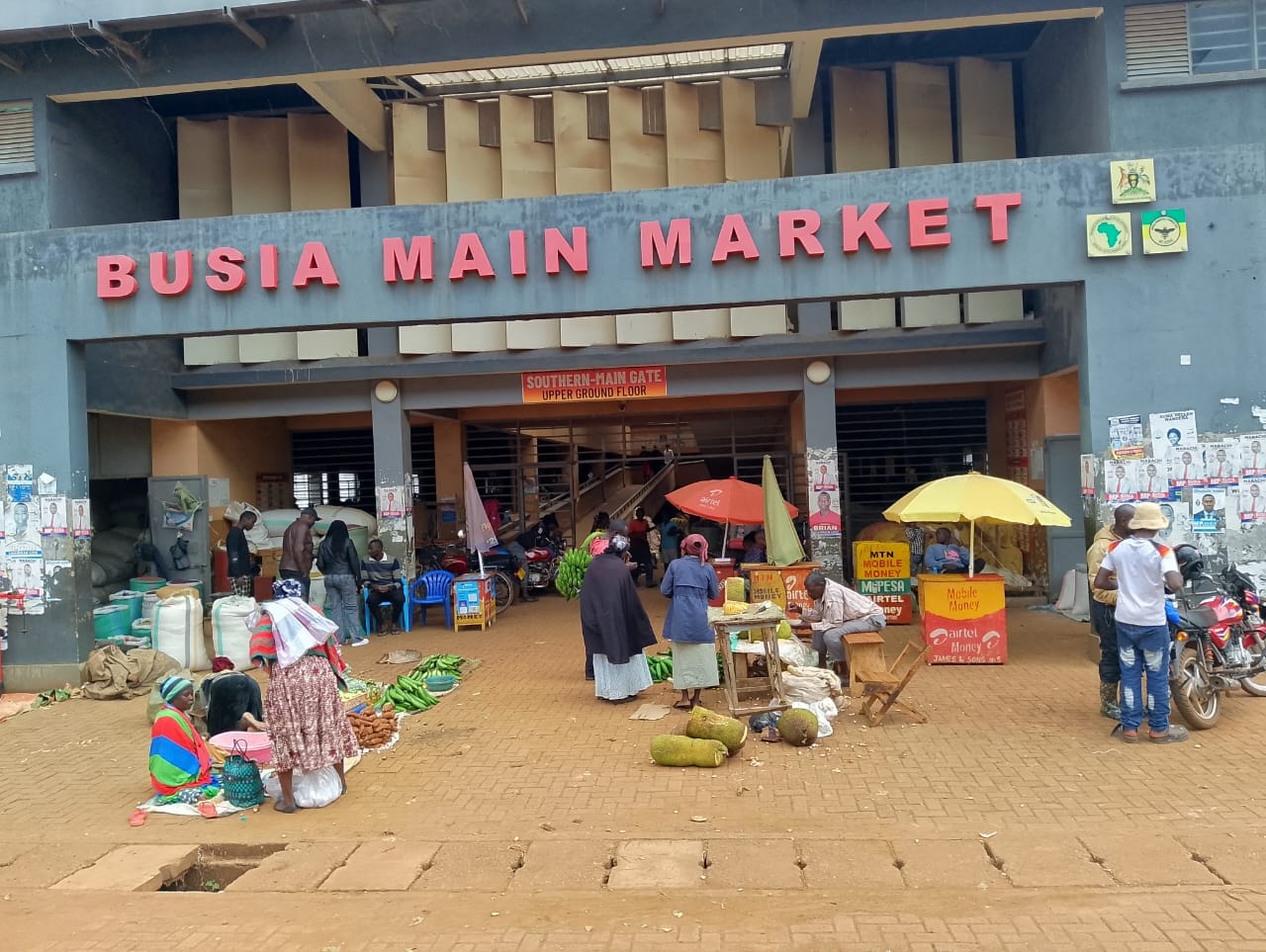
Beyond the training room, the AGMARK team made a courtesy visit to Busia Main Market in Uganda, where the reality of cross-border grain trade unfolds daily. This market serves as a vital commercial hub where traders buy, sell, and store grains before moving them across the border. The visit provided an invaluable opportunity to engage directly with traders in their working environment, observing firsthand the market conditions, storage facilities, and operational challenges they navigate.
During the market visit, team members spoke with several traders about their post-harvest handling practices, the quality standards they maintain, and the barriers they face in accessing structured markets. These conversations revealed the practical gaps between training knowledge and real-world application, such as limited access to proper storage infrastructure, fluctuating market prices, and the need for stronger buyer connections. The insights gathered from these interactions are shaping future program interventions, ensuring that training content remains grounded in the lived experiences of the traders AGMARK serves. Such field visits reinforce the project’s commitment to staying connected with market realities and continuously adapting support to meet evolving trader needs.
During the market visit, team members spoke with several traders about their post-harvest handling practices, the quality standards they maintain, and the barriers they face in accessing structured markets. These conversations revealed the practical gaps between training knowledge and real-world application, such as limited access to proper storage infrastructure, fluctuating market prices, and the need for stronger buyer connections. The insights gathered from these interactions are shaping future program interventions, ensuring that training content remains grounded in the lived experiences of the traders AGMARK serves. Such field visits reinforce the project’s commitment to staying connected with market realities and continuously adapting support to meet evolving trader needs.
Final Thoughts
This training and others across numerous border points in East and Southern Africa stand as models for effective, demand-driven capacity building in cross-border grain trade. By combining technical knowledge on grain quality standards with practical application and creating space for traders to share their real-world experiences in agricultural markets, AGMARK and AGRA are fostering a community of empowered, confident traders who can navigate complex markets and drive sustainable agricultural trade growth.
When smallholder farmers and traders are equipped with the right knowledge on post-harvest management, supported by strong facilitation, and connected to networks of peers and agricultural cooperatives facing similar challenges, the potential for impact multiplies. Busia is one more step forward in building a more inclusive, efficient, and prosperous cross-border grain trade system across East and Southern Africa; strengthening food security and economic opportunities for women and youth in the process.
When smallholder farmers and traders are equipped with the right knowledge on post-harvest management, supported by strong facilitation, and connected to networks of peers and agricultural cooperatives facing similar challenges, the potential for impact multiplies. Busia is one more step forward in building a more inclusive, efficient, and prosperous cross-border grain trade system across East and Southern Africa; strengthening food security and economic opportunities for women and youth in the process.